
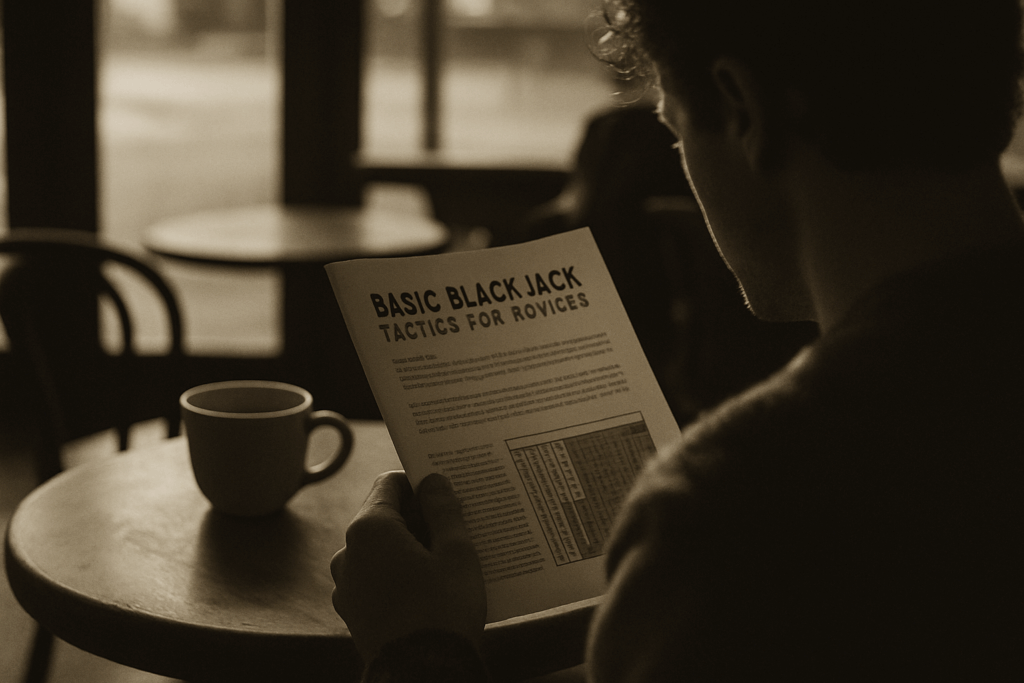
Know the Basics First
Blackjack isn’t poker you’re not trying to outwit the person next to you. Your only opponent is the dealer. Plain and simple, your goal is to build a hand that’s closer to 21 than the dealer’s without going over. If you bust (go over 21), you’re done. If the dealer busts and you haven’t, you win.
Cards have straightforward values: numbers 2 through 10 are worth their face value, face cards (Jack, Queen, King) are each worth 10, and Aces can be 1 or 11 whichever helps your hand.
You’ve got four main tools in blackjack:
Hit: Take another card.
Stand: Stay with what you’ve got.
Double Down: Double your initial bet and take just one more card used when you feel confident you’re ahead.
Split: If your first two cards are the same, you can split them into two hands. More hands, more chances to win but also more to lose if you play it wrong.
Start slow, keep your plays simple, and always know the rules before you sit down. Mistakes get expensive fast.
New to casinos? Start with this beginner casino guide for a full walkthrough.
The Power of Basic Strategy
Let’s strip it down: basic strategy is a mathematically proven set of decisions that gives you the best shot at winning in every possible blackjack scenario. It doesn’t guarantee victory, but it minimizes the house edge sometimes down to as low as half a percent. That matters.
Memorizing a basic strategy chart might sound dull, but if you’re not using it, you’re just guessing. The chart tells you exactly when to hit, stand, split, or double down based on your hand and the dealer’s upcard. Seems simple and it is but most people play off of gut instinct, and that’s where they bleed chips fast.
Here are a few classic scenarios: if you’re holding 16 and the dealer’s showing a 10, hit standing here is asking to lose. Got a 12 against a dealer’s 4? Stand. It looks weak, but the odds are in your favor if you hold. Basic strategy helps remove doubt from moments like these. It’s cold, it’s calculated and it works.
Bottom line: if you want to get serious about blackjack, ditch the guesswork. Learn the chart. Drill it until it’s automatic. The more decisions you make based on math instead of hope, the longer your chips stay in play.
Manage Your Bankroll Like a Pro
Before the first card hits the felt, know exactly how much you’re willing to lose. Not how much you hope to lose how much you can walk away from without flinching. That’s your budget. Stick to it. Blackjack can feel like a fast game, but real trouble starts when you treat it like an ATM. You’re not chasing wins. You’re managing risk.
Chasing losses is where beginners go off the rails. You lose a hand, so you double your next bet to win it back. Then you lose that one, too. Suddenly, you’re in deep. It’s a classic trap, and the table doesn’t care how bad you want to recover. Play each hand clean. Don’t bring emotional debt into strategic decisions.
As for betting minimums start there. Let the table feel you out, not the other way around. Only raise your bet when you’re on solid footing: you’ve seen several hands, the deck’s working in your favor, and you’re playing with profits not desperation. Know when to pull back, too. A steady hand lasts longer than a hot streak.
Smart Moves with Pairs and Aces

Pair splitting may seem like a gamble within the game itself, but when used strategically, it can tip the odds in your favor. Not all pairs are created equal knowing which ones to split (and which to avoid) is a must for any beginner ready to level up.
When Splitting Works to Your Advantage
There are certain situations where splitting pairs gives you a clear statistical edge:
Face and high value cards in the dealer’s hand mean you’ll want to create more chances to beat their total
Low to mid value pairs, when split, can give you two strong hands instead of one weak one
Dealer’s visible card plays a big role sometimes a split moves you from likely loss to possible win
The Golden Rule: Split 8s and Aces
If there’s one rule most blackjack pros agree on, it’s this:
Always split Aces and 8s
Aces: Two Aces are a weak 12. Split them, and suddenly you have two chances to land 21.
8s: A hard 16 is one of the worst hands in blackjack. Splitting 8s gives you a shot at turning a losing hand into two competitive hands.
This move isn’t debatable it’s basic strategy at work.
Hands You Should Never Split
Some pairs look promising but can cost you serious chips if split. As a rule, never split these:
10s or face cards (Jacks, Queens, Kings): A pair of 10 value cards gives you 20 an incredibly strong hand you should never break up. Don’t get greedy.
5s: Ten is a good starting number double down instead of splitting. Splitting 5s weakens your odds.
4s: Splitting these often leaves you with tough hands and low returns. Better to hit or fold depending on the dealer’s card.
Splitting correctly isn’t just about the cards you’re dealt it’s also about understanding timing, dealer position, and your overall odds. Don’t guess. Know the plays.
Avoid the Rookie Mistakes
Let’s cut straight to it most beginners lose money not because the game is unfair, but because they walk in with bad habits. Here are three you can fix right now.
Don’t take insurance here’s why: If the dealer shows an Ace, they’ll offer you insurance. It’s tempting because it feels like you’re protecting your hand. You’re not. Statistically, insurance is a side bet stacked heavily in the house’s favor. Over time, taking it drains your bankroll. Unless you’re counting cards (and doing it well), skip it every time.
Stop mirroring the dealer: You’re not the dealer. You’re not paid to play like one. Some rookies think copying the dealer’s moves standing on 17, hitting everything below gives them a steady shot at winning. In reality, you’re ignoring your own cards and the dealer’s upcard, which means you’re flying blind. Use basic strategy, not guesswork.
Ignoring table flow will cost you more than you think: No, we’re not talking about superstitions. But table rhythm matters. Who’s playing fast? Who’s slowing the game down? Are you distracted by side chatter or dealer shifts? Awareness keeps your focus sharp and helps you avoid rushed, emotional decisions. Blackjack punishes mindless play.
Fix these three errors and you’re no longer the low hanging fruit. You’re in the game not just feeding the house.
Dealer Rules Matter
Knowing how the dealer plays their hand is just as important as knowing how to play your own. Small rule variations especially involving the dealer’s actions on a ‘soft 17’ can have a big impact on your odds.
Understand the Soft 17 Rule
A ‘soft 17’ hand includes an Ace counted as 11 for example, Ace + 6. Some casinos require dealers to hit on soft 17, others require them to stand. It might sound minor, but:
When the dealer stands on soft 17, the house edge is slightly lower.
If the dealer hits on soft 17, they have a better chance to improve their hand, which is worse for players.
Your takeaway: Always find out which rule applies before you choose a table.
How House Rules Tilt the Odds
Not all blackjack games are created equal. A few seemingly small rule variations can subtly shift the advantage away from the player:
Payouts: A 3:2 payout for blackjack is standard avoid tables offering only 6:5. That small change increases the house edge.
Number of decks: Fewer decks are better. A single or double deck game gives sharper players slightly better chances than a six or eight deck shoe.
Double down rules: Some tables only let you double on specific hands be sure to confirm you can double on any two cards.
Spot the Best Tables
Before you place a single bet, scan the room for optimal tables. Look for those with:
3:2 blackjack payouts
Fewer decks (ideally two or fewer)
Dealers who stand on all 17s
Liberal doubling and splitting rules
The bottom line: Even if your strategy is solid, a bad table setup can work against you. Learn the rules, scout the tables, and let the details work in your favor.
Practice Before You Play Real Money
If you’re serious about improving your blackjack game, there’s no excuse for not grinding through practice first. Free online tools make it easy to sharpen your instincts without dipping into your actual bankroll. Sites and apps offer everything from basic hit or stand drills to full scale blackjack simulators that mirror real casino conditions.
What sets great players apart is repetition under pressure. Simulators help you get there. They let you deal with split second decisions, risk reward calls, and evolving hands all without costing a cent. The best part? You can review your mistakes, reset, and run it back until the moves become second nature.
Whether you’re testing basic strategy or learning to read the table better, online tools let you build your skill set quietly and efficiently. No cards to shuffle. No chips to lose.
(Need a full rundown before stepping into a casino? Check out our complete beginner casino guide to go in ready.)
Final Edge: Patience Pays
Blackjack rewards discipline more than drama. Playing hand after hand with focus and calm is what separates steady winners from streak chasing amateurs. Think marathon, not sprint. That means pacing your bets, protecting your bankroll, and knowing when to step away even if you’re on a heater.
Pressure at the table is real, especially when the dealer catches fire. But the player who stays composed, sticks to strategy, and avoids chasing losses usually walks away better off. Don’t play every hand like it has to be the one. Let the numbers work over time.
Luck shows up, but strategy keeps the lights on. That’s the long game. If you follow a solid plan and stay cool under fire, you put math on your side. That’s how you make blackjack more than just a game of chance it becomes one of patience, timing, and smart execution.
 There is a specific skill involved in explaining something clearly — one that is completely separate from actually knowing the subject. Judith Pollareader has both. They has spent years working with game strategies and techniques in a hands-on capacity, and an equal amount of time figuring out how to translate that experience into writing that people with different backgrounds can actually absorb and use.
Judith tends to approach complex subjects — Game Strategies and Techniques, Responsible Gambling Practices, Gambling News and Updates being good examples — by starting with what the reader already knows, then building outward from there rather than dropping them in the deep end. It sounds like a small thing. In practice it makes a significant difference in whether someone finishes the article or abandons it halfway through. They is also good at knowing when to stop — a surprisingly underrated skill. Some writers bury useful information under so many caveats and qualifications that the point disappears. Judith knows where the point is and gets there without too many detours.
The practical effect of all this is that people who read Judith's work tend to come away actually capable of doing something with it. Not just vaguely informed — actually capable. For a writer working in game strategies and techniques, that is probably the best possible outcome, and it's the standard Judith holds they's own work to.
There is a specific skill involved in explaining something clearly — one that is completely separate from actually knowing the subject. Judith Pollareader has both. They has spent years working with game strategies and techniques in a hands-on capacity, and an equal amount of time figuring out how to translate that experience into writing that people with different backgrounds can actually absorb and use.
Judith tends to approach complex subjects — Game Strategies and Techniques, Responsible Gambling Practices, Gambling News and Updates being good examples — by starting with what the reader already knows, then building outward from there rather than dropping them in the deep end. It sounds like a small thing. In practice it makes a significant difference in whether someone finishes the article or abandons it halfway through. They is also good at knowing when to stop — a surprisingly underrated skill. Some writers bury useful information under so many caveats and qualifications that the point disappears. Judith knows where the point is and gets there without too many detours.
The practical effect of all this is that people who read Judith's work tend to come away actually capable of doing something with it. Not just vaguely informed — actually capable. For a writer working in game strategies and techniques, that is probably the best possible outcome, and it's the standard Judith holds they's own work to.